

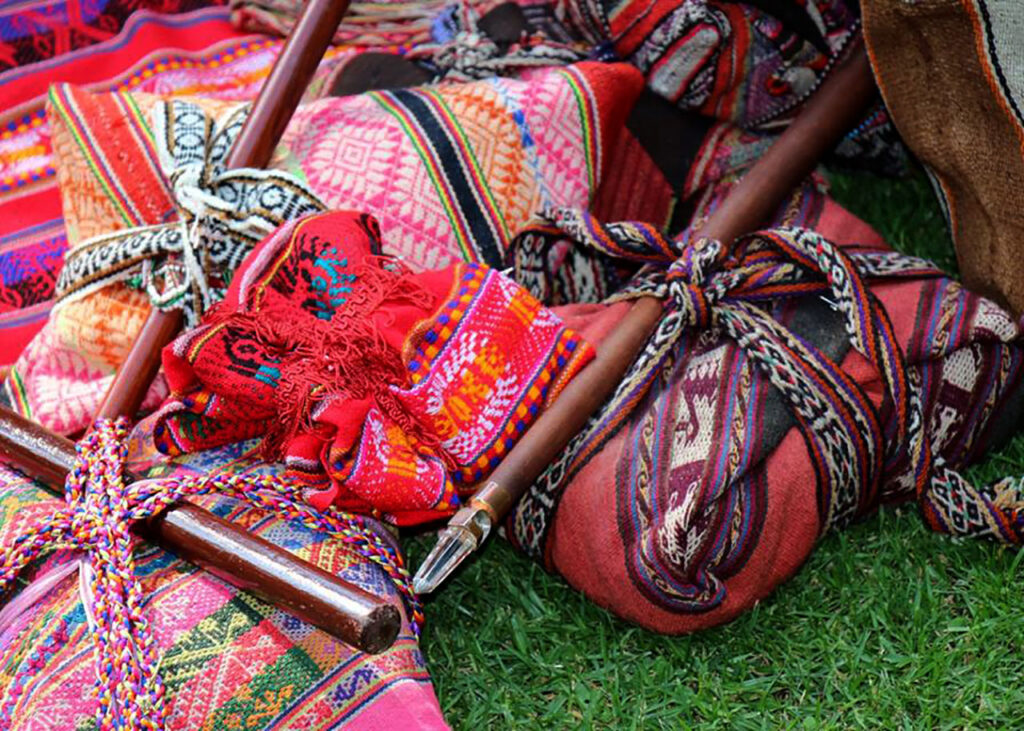
Within Andean cosmology, the mesa [sacred bundle or portable altar] is one of the most intimate and enduring expressions of a practitioner’s relationship with the living world. Known also as misha [sacred bundle, lit. “cloth of power” in Q’ero/Cusco Quechua], this object is neither a collection of tools nor a symbolic display. It is a living relational entity: a vessel of accumulated energy, memory, and covenant between the paqo [Andean spiritual practitioner or medicine carrier] and the forces of the cosmos.
To understand the mesa is to understand that, within this knowledge system, objects are not passive. They carry sami [refined, luminous energy] and hucha [heavy, dense energy], and they participate in the ongoing work of the paqo. They speak. They respond. They evolve.
The Mesa as Relational System
The mesa does not belong to the paqo in the way a tool belongs to a craftsperson. It is better understood as a covenant object: a living record of ayni [sacred reciprocity, the principle of mutual exchange] between the practitioner and Pachamama [living Earth, the great nurturer], the Apus [mountain spirits and non-human persons of great power], ancestral lineages, and the subtle dimensions of Pacha [space-time reality; the living cosmos].
Within Sacred Andean Traditions, the mesa is typically carried in a cloth (often a unkhuña or unkuña), a woven textile of considerable symbolic significance. The bundle itself is opened only with ceremony, with intention, and with the full acknowledgement that one is entering into sacred space.
The mesa is not static. It is an ongoing conversation.
The Closed Mesa Path
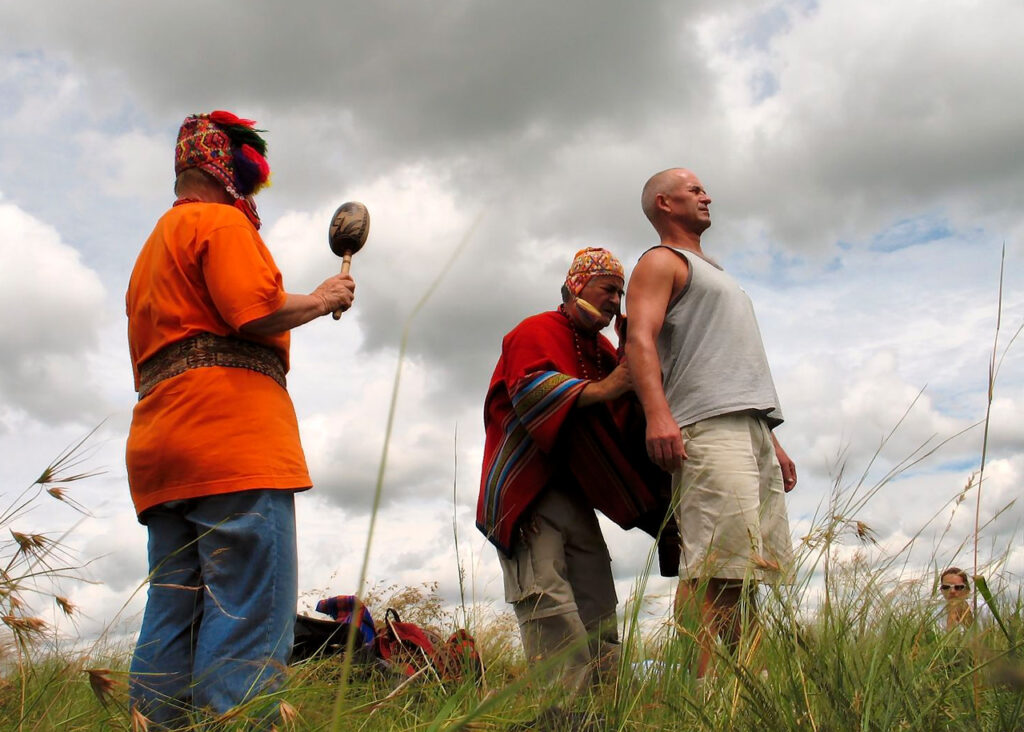
The Pampa Mesayoq and Alto Mesayoq traditions, the two primary levels of paqo initiation documented among Q’ero communities, each maintain distinct relationships with the mesa. Within the closed mesa tradition, the bundle is not opened casually or for display. It is held in munay [unconditional love and compassionate intent], opened only when the conditions of ceremony, lineage, and relational ethics align.
This is important for those new to the path: the mesa is not a collection to be curated aesthetically. It is a relational responsibility. Each object within it holds a thread of connection to a specific encounter, a specific moment of transmission, a specific dimension of the living world. To open the mesa is to re-enter those relationships simultaneously.
How New Objects Are Chosen
For those beginning their path, the question of how objects enter the mesa is one of the most practically misunderstood areas of this knowledge system.
The short answer: objects are not simply collected. They are received.
The object calls first. Within Andean ontology, non-human entities (stones, feathers, seeds, bones, shell) possess agency. A stone found at the base of an Apu does not become a khuya [healing stone of power; an object charged with relational energy] simply because a paqo picks it up. It becomes a khuya when there is mutual recognition: when the stone, the land, and the practitioner enter into relationship. Permission is always sought first. Before any object is incorporated into the mesa, the practitioner enters into dialogue through prayer, through stillness, through offerings of coca leaves read as a divinatory medium, asking Pachamama and the relevant Apus whether this object belongs. This is not ceremonial formality. Within the epistemology of this tradition, failure to ask is a failure of ayni; a rupture in the relational fabric that can cause the object to carry dissonance rather than sami. The teacher or lineage holder confirms. In the closed mesa tradition, objects are frequently given by one’s teacher, received from a ceremony, or gifted through a dream or vision. These are understood as transmissions rather than acquisitions. The authority to confirm whether an object belongs in a mesa rests ultimately with the lineage: with the teacher who holds the broader relational knowledge that the student is only beginning to develop. The object is blessed and named. Once confirmed, the object undergoes a ceremony of despacho [offering bundle; ceremony of reciprocal exchange with the living cosmos] or direct energetic blessing, in which it is breathed upon, smoked with mapacho [sacred tobacco, Nicotiana rustica], sung to, and formally introduced into the energetic body of the mesa. This is the moment of saminchakuy [the act of refining and clarifying energy], through which the object’s sami is activated and its hucha released. Objects may also leave. The mesa is not a permanent archive. Objects that have completed their work, or whose relational energy has shifted, may be ceremonially returned to a river, a mountain, or the earth. This is not loss; it is completion. The living system of the mesa breathes in both directions.
Practical Guidance for the New Paqo
For those new to the path, working within the guidance of a lineage holder, the following orientations are offered:
Move slowly. A mesa of three deeply relational objects is more powerful than a bundle of thirty items gathered without discernment. Depth precedes breadth in this knowledge system. Cultivate stillness before seeking. The objects that belong in your mesa will become visible when your inner state can receive them. This is why many traditions emphasise yachay [knowledge rooted in direct experiential knowing; lived wisdom] before collection. Work with the coca leaf. Kintu [a ritual arrangement of three perfect coca leaves] is the primary language of Andean reciprocity. Sit with your questions at the mesa of Pachamama herself before bringing new objects into your own. Honour what you have been given. Transmission objects (those received from a teacher, a ceremony, or a sacred site) carry the weight of lineage. Treat them accordingly. Let the mesa surprise you. The relational intelligence of this system is older and wiser than any individual practitioner. Trust the process of reception over the impulse of acquisition.
The Mesa as Mirror of the Path
Ultimately, the mesa reflects who the paqo is becoming. It records the encounters they have had, the mountains that have spoken to them, the ceremonies that have shaped them, the healings they have given and received. It is not a destination. It is, as the tradition itself is understood within Andean cosmology, a living path: Qhapaq Ñan [the great road of wisdom, the path of right relationship].
To carry a mesa is to carry a responsibility of beauty and reciprocity. To add an object is to deepen that responsibility. And to open the bundle before another is to offer, in the most intimate sense, a window into the relational world one is learning to inhabit.
[instagram-feed feed=1]
You must be logged in to post a comment.